SEARCH WHAT YOU WANT

English

Plate heat exchangers
A plate heat exchanger is a novel, high-efficiency heat exchanger composed of a stack of metal plates, each featuring a specific corrugated pattern. Thin, rectangular channels are formed between these plates, facilitating heat exchange across the plate surfaces. Plate heat exchangers serve as ideal equipment for liquid-to-liquid and liquid-to-vapor heat exchange applications.
A plate heat exchanger is a novel, high-efficiency heat exchanger composed of a stack of metal plates, each featuring a specific corrugated pattern. Thin, rectangular channels are formed between these plates, facilitating heat exchange across the plate surfaces. Plate heat exchangers serve as ideal equipment for liquid-to-liquid and liquid-to-vapor heat exchange applications.
Previous: Tubular heat exchanger
Next: No more data
Product Details
▎Applications in Food and Beverage Processing
1. Various Dairy Products: Fresh milk, powdered milk, milk-based beverages, yogurt, etc.;
2. Plant-Based Protein Beverages: Peanut milk, milk tea, soy milk, soy-based drinks, etc.;
3. Fruit Juice Beverages: Fresh fruit juices, fruit teas, etc.;
4. Refreshing Tea Beverages: Tea drinks, reed root beverages, fruit and vegetable drinks, etc.;
5. Condiments: Soy sauce, rice vinegar, tomato juice, sweet chili sauce, etc.;
6. Fermented Alcoholic Products: Beer, yellow rice wine, rice wine, grape wine, etc.;
▎Characteristics of Plate Heat Exchangers
1. A plate heat exchanger is a novel, high-efficiency heat exchanger composed of a stack of metal plates, each featuring a specific corrugated pattern. Thin, rectangular channels are formed between these plates, facilitating heat exchange across the plate surfaces. Plate heat exchangers serve as ideal equipment for liquid-to-liquid and liquid-to-vapor heat exchange applications.
2. Plate heat exchangers are characterized by high heat exchange efficiency, high heat recovery rates, minimal heat loss, a compact footprint, flexible modular assembly, simple operation, ease of installation, disassembly, and cleaning, a long service life, low investment costs, and safe operation.
3. Under equivalent pressure drop conditions, the heat transfer coefficient of a plate heat exchanger is 3 to 5 times higher than that of a tubular heat exchanger; furthermore, it occupies only one-third of the floor space required by a tubular unit, and its heat recovery rate can exceed 90%.
▎Applications in Food and Beverage Processing
1. Various Dairy Products: Fresh milk, powdered milk, milk-based beverages, yogurt, etc.;
2. Plant-Based Protein Beverages: Peanut milk, milk tea, soy milk, soy-based drinks, etc.;
3. Fruit Juice Beverages: Fresh fruit juices, fruit teas, etc.;
4. Refreshing Tea Beverages: Tea drinks, reed root beverages, fruit and vegetable drinks, etc.;
5. Condiments: Soy sauce, rice vinegar, tomato juice, sweet chili sauce, etc.;
6. Fermented Alcoholic Products: Beer, yellow rice wine, rice wine, grape wine, etc.;
▎Characteristics of Plate Heat Exchangers
1. A plate heat exchanger is a novel, high-efficiency heat exchanger composed of a stack of metal plates, each featuring a specific corrugated pattern. Thin, rectangular channels are formed between these plates, facilitating heat exchange across the plate surfaces. Plate heat exchangers serve as ideal equipment for liquid-to-liquid and liquid-to-vapor heat exchange applications.
2. Plate heat exchangers are characterized by high heat exchange efficiency, high heat recovery rates, minimal heat loss, a compact footprint, flexible modular assembly, simple operation, ease of installation, disassembly, and cleaning, a long service life, low investment costs, and safe operation.
3. Under equivalent pressure drop conditions, the heat transfer coefficient of a plate heat exchanger is 3 to 5 times higher than that of a tubular heat exchanger; furthermore, it occupies only one-third of the floor space required by a tubular unit, and its heat recovery rate can exceed 90%.
Previous: Tubular heat exchanger
Next: No more data
Related Products
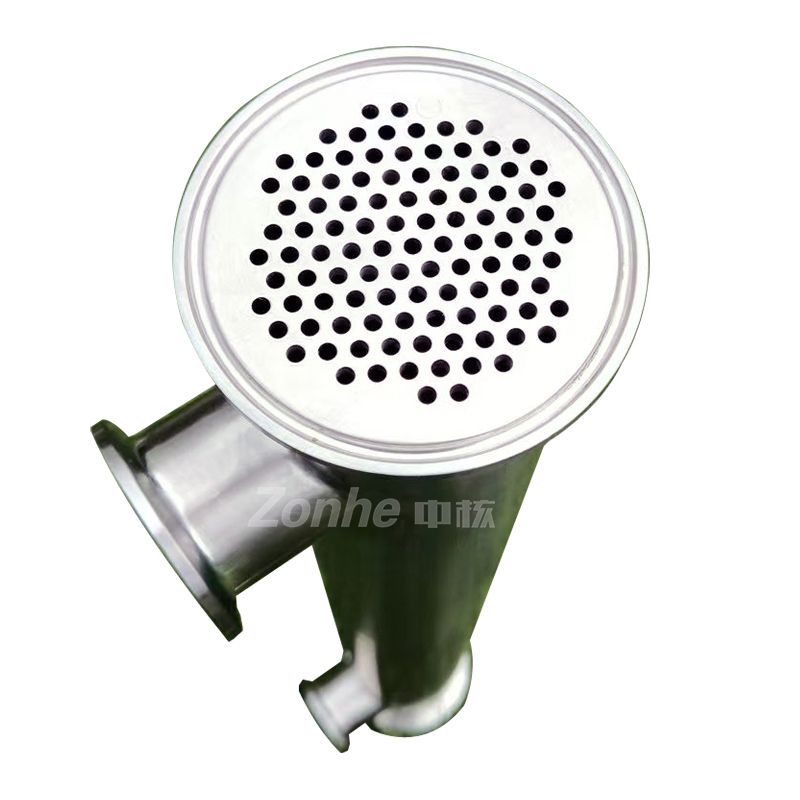
Double-tube-sheet heat exchanger-
Double-tube-sheet heat exchanger
The sanitary double-tube-sheet heat exchanger is designed for use in applications requiring the highest levels of sanitary compliance. Its unique design results in a simple, compact, and aesthetically pleasing structure, while simultaneously deliveri...
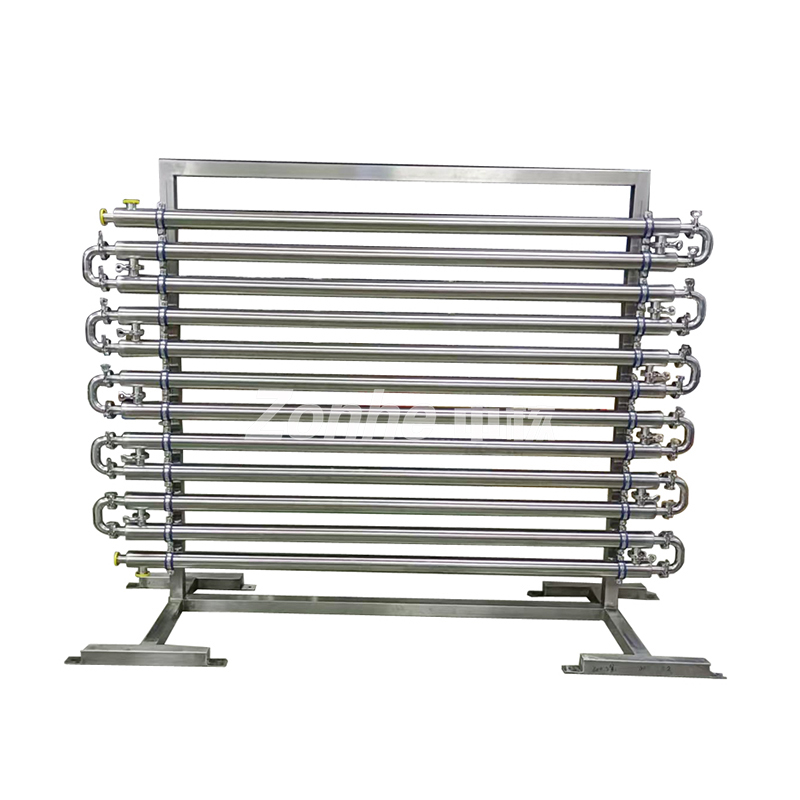
Tubular heat exchanger-
Tubular heat exchanger
The tubular heat exchanger is composed of concentric tubes of different sizes. The inner tube is connected by U-shaped elbows. In this heat exchanger, one fluid flows inside the tube, while the other fluid flows in the gap between the inner and outer...
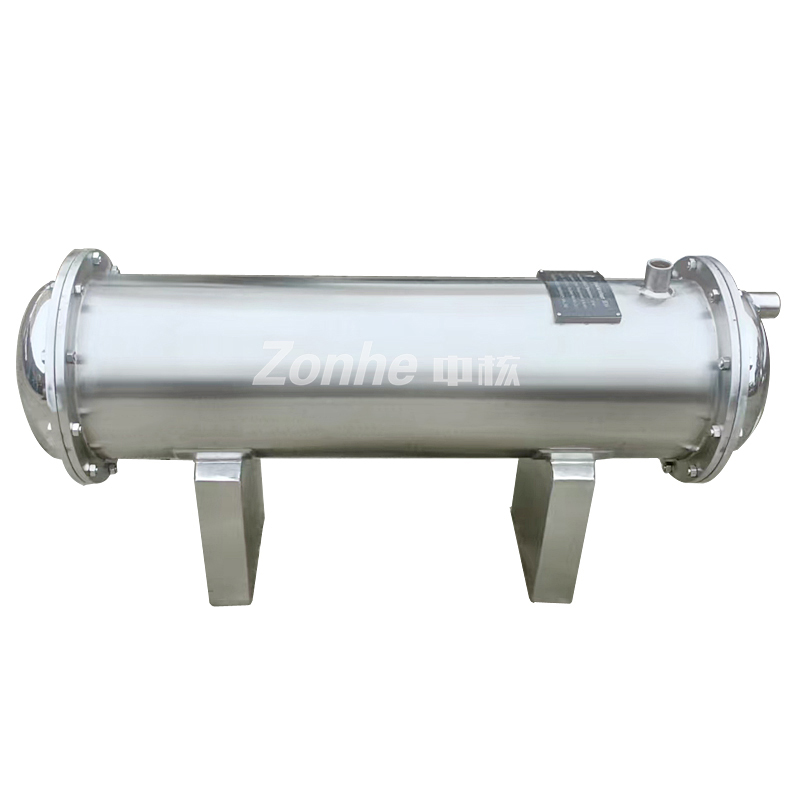
Tubular heat exchanger-
Tubular heat exchanger
The tubular heat exchanger—also known as the shell-and-tube heat exchanger—is a type of partition-wall heat exchanger that utilizes the surfaces of a tube bundle enclosed within a shell as its heat transfer medium. This type of heat exchanger feature...
Get Your Free Sample Now
Submit this form and our sales representative will contact you soon.

Copyright © 2026 Wenzhou Zhonghe Machinery Co., Ltd.